
Engineering Services for Factories Across North Wales, Cheshire, and Merseyside
By Ventarus Engineering Services Ltd, engineering services for Chester, North Wales and Merseyside
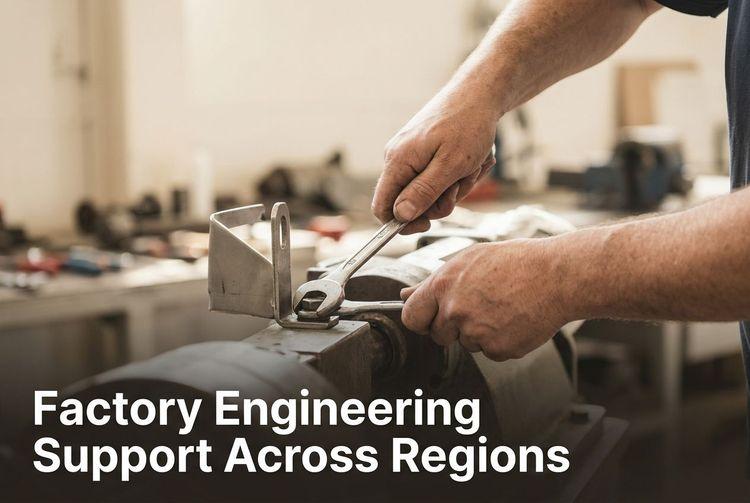
If you need practical engineering support across North Wales, Cheshire, or Merseyside, the work usually comes down to the same problem: keep plant running, fix what has failed, and improve the parts of the process that keep causing trouble. That is what we do. Ventarus provides engineering services North Wales, engineering services Cheshire, and engineering services Merseyside for manufacturing and industrial sites that need maintenance support, fabrication, welding, repairs, modifications, guarding, access improvements, and process fixes that fit the real job.
You do not need a whole redesign to get value here. In many factories, the pressure is more immediate. A machine is down. A bracket has cracked again. A workstation is awkward. A shutdown window is coming up and the internal team is already stretched. The right answer is often a repair, a fabricated part, a modification, or a maintenance job that is planned around production, not a long theory session.
Practical engineering support for factories in North Wales, Cheshire, and Merseyside
The short answer is that we support manufacturing and industrial sites across North Wales, Cheshire, and Merseyside with hands-on engineering work that keeps equipment working and makes it easier to run. That includes planned maintenance, reactive repairs, fabrication, welding, machine changes, guarding, access improvements, and production support.
For a maintenance manager, that matters because not every problem needs a new machine. Some problems need extra hands. Some need a better repair. Some need a part that does not exist off the shelf. Some need the equipment to be made safer, easier to access, or less awkward to use. The job is to choose the route that solves the site problem without creating a new problem.
We work with manufacturing plants, production facilities, food and beverage sites, packaging and processing operations, automotive and component manufacturers, engineering workshops, OEMs, warehouses, logistics environments, facilities teams, and contractors. The common thread is simple. You have equipment, pressure, and limited time. We help with the engineering side of that workload.
If you are looking for engineering services North Wales, engineering services Cheshire, or engineering services Merseyside, the most useful question is not “what trade do I need?” It is “what outcome do I need at the machine, on the floor, and in the next shift?” That is the standard we work to.
Manufacturing plant maintenance that keeps production moving
Plant maintenance is where a lot of the pressure starts, because it sits between planned work and the things that break without warning. We support planned preventative maintenance, reactive maintenance, breakdown repairs, mechanical repairs, component replacement, equipment inspection, condition improvement, machine modifications, guarding, access and safety improvements, shutdown work, refurbishment, and support for recurring reliability issues.
That mix matters because many sites do not have a single maintenance problem. They have a queue. Planned work gets interrupted by breakdowns. Repeat failures take up time that was meant for routine upkeep. A safety improvement gets delayed because there is always a more urgent fault. We help carry some of that load so the team can get through the week without everything turning into a fire drill.
Plant maintenance support is especially useful when the equipment is still worth keeping but needs practical attention. That may mean repairing worn or damaged parts, replacing components, improving access, or modifying the machine so the same fault does not keep returning. It may also mean supporting a shutdown or refurbishment window, where the work has to be done in a fixed period with site access, installation needs, and production timing all already set.
We do not present maintenance as a fixed schedule or a one-size-fits-all contract. The right approach depends on the plant, the failure pattern, and the work window. What matters is that the maintenance job is planned in a way that fits the site, not the other way around.
Engineering repairs and breakdown support when the job cannot wait
When a component fails or equipment is damaged, the question is not just how to fix it. It is how to get the line back in a workable state without wasting time on the wrong repair. Our breakdown support is assessment-led. We look at the issue, decide what route makes sense, and carry out the required mechanical work, fabrication, welding, or modification where appropriate.
That can include damaged component repairs, weld repairs and reinforcement, fabricated replacement parts, bracket, frame, and structure repairs, equipment repair and modification, mechanical repair support, temporary or permanent engineered solutions, and root-cause investigation for repeat failures where required.
This is the part that saves time when an off-the-shelf replacement is not enough. A simple part swap can be the right answer. But not always. Sometimes the better move is a fabricated replacement section, a reinforced bracket, or a small design change that stops the failure from repeating. That is the difference between getting through the shift and getting stuck with the same problem next week.
We do not promise that every breakdown can be repaired on site or immediately. Some jobs need more information before the scope is clear. Load-bearing, high-accuracy, or safety-critical work may need drawings, measurements, photos, or an on-site assessment before the repair route is confirmed. That is a sensible limit, not a delay tactic. It keeps the fix tied to the real job.
For managers, this is often the point where the pressure is highest. Production wants movement. Maintenance wants a durable fix. Safety needs the work done properly. The right breakdown repair should respect all three.
Industrial fabrication for parts, supports, guards, and site-specific metalwork
Industrial fabrication is where a lot of awkward factory problems get solved. If the machine layout is non-standard, the space is tight, or the original part is no longer available, we can fabricate purpose-built metalwork around the actual site conditions.
Our fabrication work includes machine guards and safety enclosures, frames, supports, brackets, and stands, platforms, walkways, handrails, access equipment, workbenches, trolleys, material-handling aids, replacement machine parts and repair sections, equipment supports, housings, and protective structures, one-off prototypes and production aids, site-specific fabricated modifications, and bespoke steel fabrication.
That range is useful because factories rarely run on neat catalogues. Real plants have old equipment, mixed vendor gear, site-specific constraints, and a history of changes made over time. A standard part may be available for some jobs, but not for the ones that cause the most trouble. Fabrication gives you a way to build the part, guard, support, or access solution that actually fits the equipment.
We can work from existing drawings, measurements, photographs, samples, or an on-site discussion. That helps when original documentation is missing, which is common on older or heavily modified equipment. It also helps when you need a replacement part or retrofit and do not want to wait while the whole problem is rebuilt from scratch. Sometimes the fastest route is just the one that gives us enough technical context to make the right thing.
If you are comparing options, this is where fabricated metalwork often beats a generic replacement. It is not because custom is always better. It is because the site problem is custom, whether the supplier catalogue says so or not.
Welding, structural repair, and reinforcement for working equipment
Welding support is part of how we repair and improve equipment that is already in service. We provide MIG welding and TIG welding for fabricated assemblies, on-site welding repairs, structural repairs and reinforcement, repair of damaged steel components, and welding support for industrial installation projects.
The practical use cases are usually straightforward. A steel member cracks. A frame needs reinforcement. A damaged section needs repair instead of full replacement. A machine component needs welding as part of a larger modification. A fabricated assembly has to be built to suit an existing process or support structure.
What matters is not the label on the process. It is whether the welded repair holds up in the working environment. A factory floor is not a test bench. It sees vibration, load changes, access issues, repeated use, and the kind of wear that shows up after the job is already back in service. That is why weld repair and reinforcement need to be matched to the actual equipment and the way it is used.
We do not publish unsupported technical limits, coded-welder claims, inspection regimes, or special certification claims here. If the job is complex, high-accuracy, or safety-critical, the scope may need more detail before work is confirmed. That is normal. It is also the right way to avoid a repair that looks fine on paper and fails in the plant.
For many sites, this service is what keeps useful equipment in circulation. Replacing every damaged component is not always practical. Sometimes the better move is to repair, reinforce, and return the asset to service with less disruption.
Machine modifications, guarding, and access improvements that make work easier
A lot of factory problems are not just repair problems. They are layout problems, access problems, and safety problems. That is where machine modifications, guarding, and access improvements come in. We alter machines and workstations, improve guarding and access, strengthen and reinforce equipment, add bespoke brackets, mounts, and supports, and make material handling and storage improvements.
This is the work that usually starts with a simple complaint from the floor. The operator cannot reach something easily. The guard is awkward. The machine is still useful, but it no longer suits the process. The handling path is clumsy. The access point slows every task down. Those are small problems until they are not. Over time, they affect safety, reliability, and how consistently the equipment runs.
Our approach is to modify the equipment you already have where that is the sensible route. That may mean a new guard, a better access platform, handrails, a protective barrier, a stronger support, or a custom mount that makes the machine fit the job again. It may also mean a workstation change that improves operator movement and reduces handling strain.
Guarding and access work should be treated carefully. machine guard or enclosure has to suit the actual machine, hazard, access pattern, and risk. It is not a magic stamp of compliance. The site still needs to apply its own duties and, where needed, specialist machinery-safety advice. What we do is build the practical solution around the equipment and the space available.
That is often the simplest way to make a machine safer without making it harder to run.
Process improvement and workstation changes that remove repeat friction
Some jobs sit between maintenance and production engineering. They are not just about keeping the machine alive. They are about making the process easier to run day to day. We support production-process and workstation improvements, workflow and material-flow improvements, fixtures, jigs, and production aids, workstation design and ergonomic improvements, machine and equipment modifications, bottleneck reduction and handling improvements, improvements to repeatability, usability, and operator safety, and safety upgrades.
Process improvement work does not need to be grand to matter.
This is where a lot of teams get stuck, because the problem does not look big enough for a capital project but it keeps costing time. A line stops in the same place. Operators keep working around a poor layout. A handling step keeps slowing the task down. The equipment itself is fine enough, but the way it is used is clumsy.
Process improvement work does not need to be grand to matter. A fixture can make a job repeatable. A jig can reduce variation. A better support or access change can make the same machine easier to use. A material-flow adjustment can take pressure off a bottleneck. These are practical improvements, not theory exercises.
This is also where a maintenance manager often gets the most leverage from outside help. You do not need a full re-engineering of the plant to get a useful result. You need the one change that stops the same friction point from wasting time every week. That may sound small. In a busy factory, it is not small at all.
How we approach a project around production, access, and site constraints
The hard part in factory engineering is rarely the metalwork alone. It is fitting the work into the reality of production. That is why we start by understanding the problem and the outcome you need, then we look at the equipment, available space, safety requirements, production constraints, and day-to-day use before we recommend a route.
That process usually starts with an enquiry. You send the requirement, whether that is plant maintenance, process improvement, industrial fabrication, welding, repair, equipment modification, or another engineering need. The more context you can give, the better the initial review can be. Useful information includes the work type, the issue or desired outcome, photographs or videos, drawings, sketches, dimensions, sample details, material type, thickness, finish requirements, site location, access details, installation requirements, the required completion date or shutdown window, and relevant inductions, permits, RAMS, or site-safety requirements.
We can review photos, drawings, sketches, and other supporting files to see whether a remote quotation is realistic. We accept PDF, image, DXF, DWG, STEP, and STP files, and multiple files can be submitted. For some work, that is enough to scope the job. For high-accuracy, load-bearing, safety-critical, or complex work, we may need more information or an on-site assessment before the scope is confirmed.
That is the part worth getting right early. If the access is tight, the installation window is short, or the machine needs to keep running until a planned shutdown, the work has to be planned around those constraints from the start. It is much easier to do that before the job begins than after the first unexpected delay.
We also plan around production schedules and site procedures once the scope is agreed. That is how the work stays practical instead of becoming another disruption.
You can contact Ventarus Engineering Services Ltd at queries@ventarusengineering.com.
Regional coverage across North Wales, Cheshire, and Merseyside
Ventarus is based in North Wales and supports clients across North Wales, Cheshire, and Merseyside. That includes named examples such as Flintshire, Wrexham, Chester, Liverpool, The Wirral, and surrounding industrial areas. UK-wide project work may also be available by arrangement where the scope, timing, and site requirements are suitable.
The value here is operational, not just geographic. You are not looking for a postcode. You are looking for one practical engineering partner who can handle maintenance, repair, fabrication, and modification work across nearby industrial areas without making each issue into a separate search.
That is especially useful for organisations with more than one site, or for contractors and facilities teams who need a consistent engineering contact for different jobs. The same support can cover planned maintenance, shutdown work, fabrication, welding, and machine changes where the work and timing line up.
If you are comparing engineering services North Wales, engineering services Cheshire, and engineering services Merseyside, the important point is coverage plus capability. A nearby provider only helps if they can actually do the work you need. The service has to match the site problem.
When Ventarus is the right fit
This service is a strong fit when you need extra engineering capacity, practical repair work, or a sensible route for a machine that still has value but needs attention. It suits sites dealing with planned maintenance, shutdown work, recurring faults, worn components, awkward access, poor guarding, or a process that needs a better working setup.
It also suits teams that do not need a huge project. Sometimes you just need the right repair, the right fabricated part, or the right modification to get the asset back into a better state. That can be the difference between a machine that keeps causing trouble and a machine that keeps earning its place on the floor.
The work is especially relevant for manufacturing plants, production sites, food and beverage sites, packaging and processing operations, automotive and component manufacturers, engineering workshops, warehouses, logistics environments, facilities teams, and industrial contractors. If your site depends on production equipment or fabricated assets, the same basic problem applies. You need practical support that respects the way the plant actually runs.
Start with the equipment, the problem, and the location
If you need engineering help across North Wales, Cheshire, or Merseyside, start with the one thing that matters most: describe the equipment or problem clearly and include the site location. If you have photographs, drawings, measurements, or sample details, send those too. That gives us enough to review the scope and decide whether the next step is a quote, more technical detail, an on-site assessment, or a practical discussion of the repair or fabrication route.
If the job is urgent, say so. If it has to fit a shutdown window, say that too. If access is awkward, the machine is still running, or the part is non-standard, include that up front. It saves time later and helps us plan the work around production instead of fighting it.
You can contact Ventarus Engineering Services Ltd at queries@ventarusengineering.com.
FAQ
Which areas do you cover?
We cover North Wales, Cheshire, and Merseyside, including Flintshire, Wrexham, Chester, Liverpool, The Wirral, and surrounding industrial areas. UK-wide project work may be available by arrangement when the scope and timing suit the site.
What engineering services are available for manufacturing sites?
We support plant maintenance, planned preventative maintenance, reactive repairs, breakdown support, mechanical repairs, component replacement, equipment inspection and condition improvement, industrial fabrication, MIG and TIG welding, machine and workstation modifications, guarding, access improvements, process improvement, and bespoke replacement parts.
Can you help with an urgent machine breakdown?
Yes. We provide assessment-led breakdown support and reactive maintenance for damaged components, fabricated replacement parts, welding and reinforcement, mechanical repair, and temporary or permanent engineered solutions where appropriate. Response availability is agreed in advance.
Can you fabricate a replacement part or guard from photos or measurements?
Yes. We can work from drawings, measurements, photographs, samples, or an on-site discussion. For complex, load-bearing, high-accuracy, or safety-critical work, we may need more information or an on-site assessment before the scope is confirmed.
Do you carry out machine guarding and access improvements?
Yes. That includes machine guards, safety enclosures, protective barriers, access platforms, walkways, handrails, guarding improvements, and operator-access improvements. The suitability of any guarding solution depends on the machine, the hazard, and the site’s own risk controls.